
“Throughout the Bible, numerous injunctions can be found against usury, and early Christian universities debated as to why it was sinful: it was theft of material possessions, or a theft of time, or an embodiment of the sin of Sloth.
Yet in time the Church found itself looking the other way as moneylenders found they might exploit semantic differences between ‘interest’ and ‘usury’, the latter being considered a severe and oppressive form of mere interest. Islamic law, meanwhile, remained unwavering on the issue of usury, treating money as a means to an end, not the end itself.
Medieval Christian financiers had a neat solution to the problem of usury. In a passionate treatise advocating the reform of the modern economic system, “The Problem With Interest” , the former derivatives dealer turned Islamic finance consultant, Tarek El Diwany, describes an elaborate medieval ruse known as “contractum trinius”.
This legal device allowed moneylenders to circumvent the Church’s ban on usury and some analogies may be drawn between this and some practices evident in modern Islamic finance: ‘The investor would simultaneously enter into three contracts with an entrepreneur: to invest money as a sleeping partner; to insure himself against any loss; and to sell any profits over and above a given level back to the entrepreneur in return for a fixed amount of money per year.’
In isolation, each of the three contracts remained compliant with the Church’s injunction against usury, though in combination a loan with interest had quite evidently been created. Contractum trinius allowed financiers to meet the letter of the law but not the spirit.
In time, even this combination of smoke and mirrors would disappear, as the substance of the transaction became acceptable and the form was dispensed with in favour of simple bilateral agreements. Centuries later, those moneylenders would find even more abstract methods to conjure trade from a unit of value.
El Diwany goes on to note that the acceptability of interest-based finance throughout the world makes the objections of today’s Muslims appear conspicuously old-fashioned:
‘Nowadays, injunctions against usury from religious quarters are frequently seen as little more than an embarrassing appendage of backwardness, motivated perhaps by simple-minded distaste for the money-lenders of old. Often, the religious arguments seem unscientific and weak when placed before the articulate economists of the pro-interest camp.’
And indeed within modern investment banks, Sharia-compliant financing techniques are wearily viewed as a necessary additional service for a demographic of unsophisticated and anachronistic clients. The cadre of young and ambitious structurers and sales staff touting these products may have little empathy with the philosophical framework within which their clients live.”
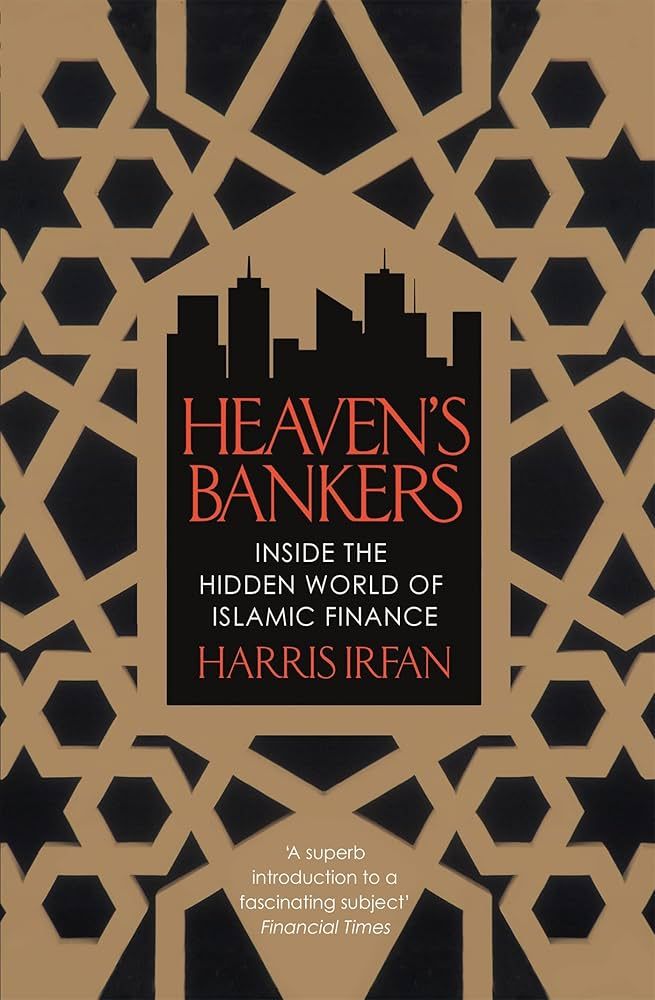
Heaven’s Bankers: Inside the Hidden World of Islamic Finance
By Harris Irfan
 Moro Blanco
Leave a comment