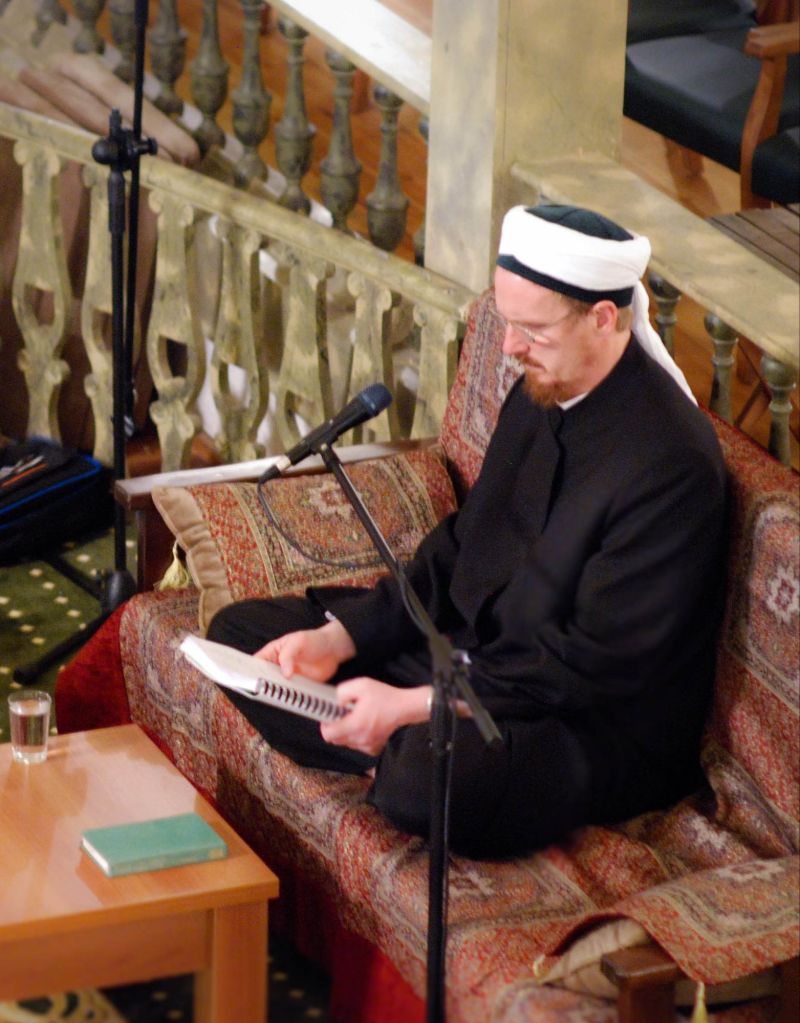
Sharia Law / Islamic Jurisprudence, differs fundamentally from Statutory Law, as explained by Shaykh Abdul Hakim Murad here:
“He does not legislate. The state does not legislate within Sharia (Islamic sacred law), and this remains consistent. Wael Hallaq’s book, titled ‘The Impossible State,’ delves into the myriad explosions, implosions, and catastrophes within the modern Muslim world, where Sharia is being proposed as the nation’s law. He asserts that this is not how Sharia operates. Upon examining the text, it becomes evident that Sharia is not synonymous with statutory law.
Thus, the Pakistani parliament cannot simply declare a particular interpretation of Islamic law, such as blasphemy, and expect it to be universally applicable to the country. The realm of Islamic law does not grant such authority to the parliament or the state. Instead, it is the law of God, subject to interpretation by jurists in countless ways. Once the state attempts to enforce it, a situation arises where the government assumes a totalitarian role, engaging in ijtihad (independent reasoning) and deciding among various ambiguous solutions. But the question remains: Does the government possess the right to exercise ijtihad? Can the members of the Pakistani military or Parliament claim expertise in ijtihad and the nuances of Hadith? I doubt it.
Hallaq argues that this legal system (Sharia) stands as one of the greatest ever conceived in human history. Toward the end of his book, he proposes methods to bridge the gap between Western law and the modern Islamist concept of the ‘Islamic State.’ However, it is essential to grasp that the latter model is entirely foreign to the Islamic legal system. Here, statutory law does not exist, and government does not legislate. Instead, a unique realm, almost anarchic in nature, emerges where communities and religious groups regulate themselves according to their own laws and appoint their own judges. It is crucial to comprehend that Islamic law carries a surprising complexity.
Yet, it must be underscored that this complexity is not an indication of latitude in theology, suggesting that truth and morality are inconsequential. On the contrary, Islamic society is deeply moralistic, and its laws are determined by serious interpreters. The unifying principle among these interpreters is the understanding that Sharia is not synonymous with statutory law and will never achieve unanimity. The texts are not designed to cater to fundamentalist readings.”
~ Shaykh Abdul Hakim Murad ( Tim Winter )
 Moro Blanco
Leave a comment