“Mouth breathing activates the upper chest, involves larger breaths, and may cause reduced oxygen uptake in the arterial blood. It is no wonder that habitual mouth breathers often suffer from poor energy, a lack of concentration, and moodiness.
We all know the stereotype of the mouth breather, portrayed by moviemakers from Hollywood to Bollywood as an idiot. But in case you think I am being unduly critical, I was a mouth breather for more than twenty years, so I know all too well the effects.
Furthermore, every time I look in the mirror I see the results from my years of mouth breathing. Dentists and orthodontists have also documented these profound facial changes as a result of habitual mouth breathing: narrow jaws, crooked teeth, sunken cheekbones, and smaller nasal cavities.
While orthodontic treatment and the wearing of braces are epidemic among modern-day teenagers, it was normal for our ancestors to have wide faces with perfectly shaped teeth.
In the 1930s, a dentist by the name of Dr. Weston Price investigated the cause of facial changes and crooked teeth in various countries and civilizations. One of his observations while visiting Gaelic people living on the Hebridean islands off the coast of Scotland was that children became mouth breathers after parents switched from their natural diet of seafood and oatmeal to the modernized diet of “angel food cake, white bread and many white flour commodities, marmalade, canned vegetables, sweetened fruit juices, jams, and confections.”
Dr. Price’s discovery illustrates the link between modern diet and chronic hyperventilation. Processed foods are mucus and acid forming. Throughout evolution, our diet consisted of 95 percent alkaline-forming and 5 percent acid-forming foods. Nowadays the reverse is true: Our diet is 95 percent acid- and 5 percent alkaline- forming foods.
Acid-forming foods-such as processed products, dairy, meat, bread, sugar, coffee, and tea-stimulate breathing. A natural response to experiencing a greater demand to breathe is to open the mouth to take in more air. Over time, the brain adjusts to this larger intake of air, and overbreathing becomes a habit.
On the other hand, alkaline-forming foods such as fruit and vegetables, along with plain water, are easy for the body to process; they are “breathing-friendly” foods. But while these types of foods are highly beneficial, I’m not saying you need to become a vegetarian. Protein is an essential part of a healthy diet, and meat provides a natural, nutrient-rich source. The most important change is to get rid of processed foods in your diet. They may take up the most space in our supermarkets, but they are effectively suitable food for no one.
The nose is one of the most important organs in the human body. In his nineteenth- century travels in North America, the artist George Catlin noticed that the Native American mothers paid a lot of attention to their infants’ breathing. If at any time the baby opened its mouth to breathe, the mother would gently press the baby’s lips together to ensure continued nasal breathing.
Catlin also noted that the rate of sickness
and illness among the native Indian people was very low in comparison with European settlers. In his aptly titled 1882 book “Shut Your Mouth and Save Your Life”, Catlin wrote, “When I have seen a poor Indian woman in the wilderness, lowering her infant from the breast, and pressing its lips together as it falls asleep… I have said to myself, ‘Glorious education! Such a mother deserves to be the nurse of Emperors.” In comparison, Catlin described how the babies of the European settlers slept with their mouths open, gasping for breath in stuffy, hot, and unventilated rooms.
Nasal breathing is often an integral part of an animal’s survival or hunting techniques. The cheetah, which is considered the fastest land animal on earth, is capable of accelerating from 0 to 60 miles per hour in just 3 seconds. Most high- performance cars cannot accelerate so quickly, with the notable exception of the Bugatti Veyron, which will set you back a million dollars to experience the natural acceleration of a cheetah.
With such incredible efficiency and speed, it doesn’t take long for the cheetah to catch up with its prey, but maintaining nasal breathing is especially advantageous during the chase, ensuring that its victim is the first to run out of air.”
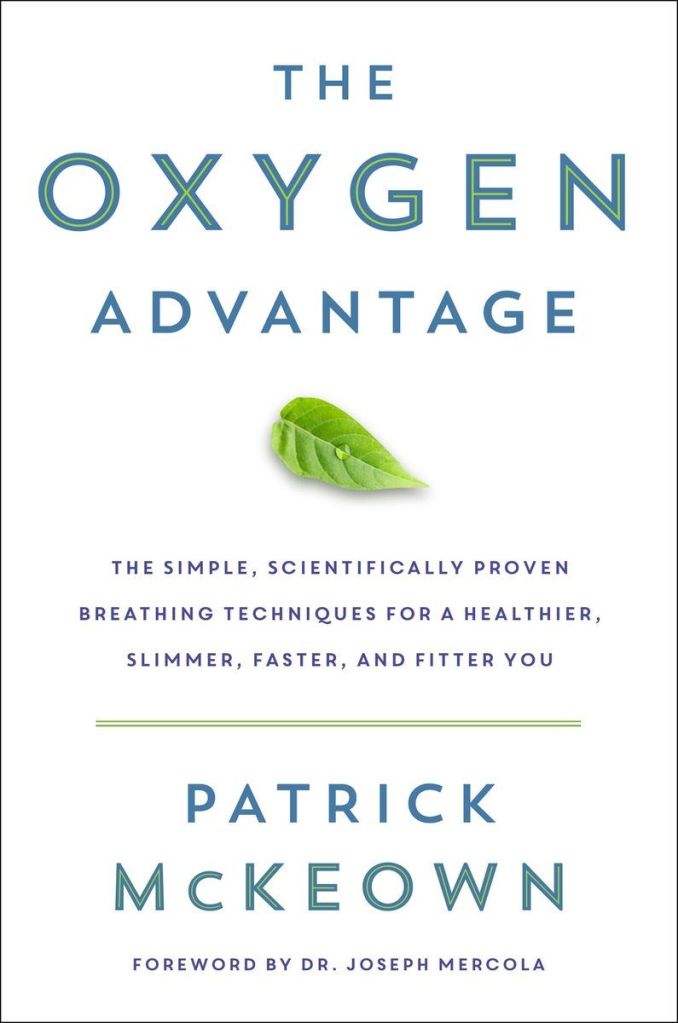
Book: The Oxygen Advantage
Author: Patrick McKeown
 Moro Blanco
Leave a comment