“At its core, Islamic theology is relatively straightforward; it is based on the belief in the absolute unity of God and the finality of Muhammad’s message. Belief in this implies acceptance of the Quran as the Word of God and the hadith as divinely-inspired guidance.
According to traditional Islamic thought, these two sources provided all that was needed for Muslims to live in accordance with the Will of God and achieve eternal happiness in Paradise. But in the middle of the eighth century, a new approach to religion itself began to emerge. As Muslims translated the scientific texts of ancient Greece, they also translated their philosophical works.
A new generation of Muslim philosophers began to believe that rationalism could be used to discover divine truths. In their view, conclusions that they came to using logic and philosophy were on the same level as the Quran itself. Some even posited that logic could override revelation in some cases. This group became known as the Mu’tazila, meaning “those who separated”, due to their divergence from mainstream Islamic theology.
Indeed, their philosophical conclusions were far from mainstream Islamic belief. They advocated that the Quran was not the literal Word of God, but rather that it was a creation, just like the created universe.
Furthermore, they believed that God is limited by the attributes he is described as having in the Quran. To them, God is not omnipotent. Thus, on the topic of freewill versus predestination, they argued in support of absolute freewill, even arguing that God Himself cannot control the future and is not aware of what will happen.
As Mu’tazili ideas began to spread among intellectual circles, a reaction came from scholars concerned with the theological implications of such ideas. To the more traditional, orthodox-minded Muslims, the Quran and hadith gave humanity all the truth and guidance it needed and using philosophy to come up with divine truths was not only unnecessary, but also dangerous.
Leading this traditionalist charge in the early 800s was Ahmad ibn Hanbal, the same scholar who founded the Hanbali school of fiqh. Despite persecution by the Abbasid caliph al-Ma’mun, who was a major patron of Mu’tazili ideology, Ibn Hanbal argued in favor of a strict, literal interpretation of the Quran and hadith when it came to theology.
In his mind, there was no room for philosophical reasoning, especially when it led to conclusions that contradicted what the Quran states as true. As such, Ibn Hanbal advocated that God’s attributes should be taken literally and not questioned. So if the Quran says that God is the All-Seeing, then God is All-Seeing, and no one should try to understand how God sees all or rationalize how it is possible.
Ibn Hanbal’s strict approach to the subject won him followers and managed to slow the spread of Mu’tazili beliefs, but they continued to be popular in academic circles until another approach at combating them arose.
“Great indeed is the crime against religion committed by anyone who supposes that Islam is to be championed by the denial of mathematical sciences.”
-Imam al-Ghazali
While the literal approach reemphasized the authority of the Quran and hadith in the face of philosophical reasoning, it failed to combat the specific ideas of the Mu’tazila. This changed when the tenth-century thinker al-Ash’ari began to advocate a defense of traditional beliefs using reason.
While he believed in a literal interpretation of the Quran like ibn Hanbal, he believed there was no harm in using philosophical reasoning to defend that interpretation. His approach to theology became known as the Ash’ari school, and his method of rational discourse known as kalam.
Using this framework, traditionalists began to attack individual Mu’tazili arguments, using the logic that the Mu’tazila themselves held in such high esteem. The greatest of these traditional-minded scholars was Abu Hamid al-Ghazali (1058-1111), who is sometimes credited as the most influential Muslim in history after the Prophet Muhammad (peace and blessings be upon him) and his Companions (May God be pleased with them all).
Having studied both Mu’tazila and Ash’ari thought in depth, he was well versed in the numerous theological arguments back and forth between the two, as well as in various other approaches to religion in general. He argued that one’s faith should not be based entirely on philosophical reasoning, but that logic had its place in the defense of traditional ideas when needed.
He cautioned, however, against the use of philosophy by those without a firm foundation in traditional Islamic belief.
According to his autobiography, he concluded that the true path to God was through absolute obedience to God and purification of the soul from worldly desires. This emphasis on purification was a major focus of the Sufis, a diverse spiritual group insistent on emotional detachment from this world in an effort to achieve nearness to God.
Al-Ghazali’s work helped finally turn back the tide of the Mu’tazila school, which retreated into oblivion in the centuries after al-Ghazali. Simultaneously, the Sufism advocated by al-Ghazali became incredibly popular and became a major movement in almost all Muslim lands.”
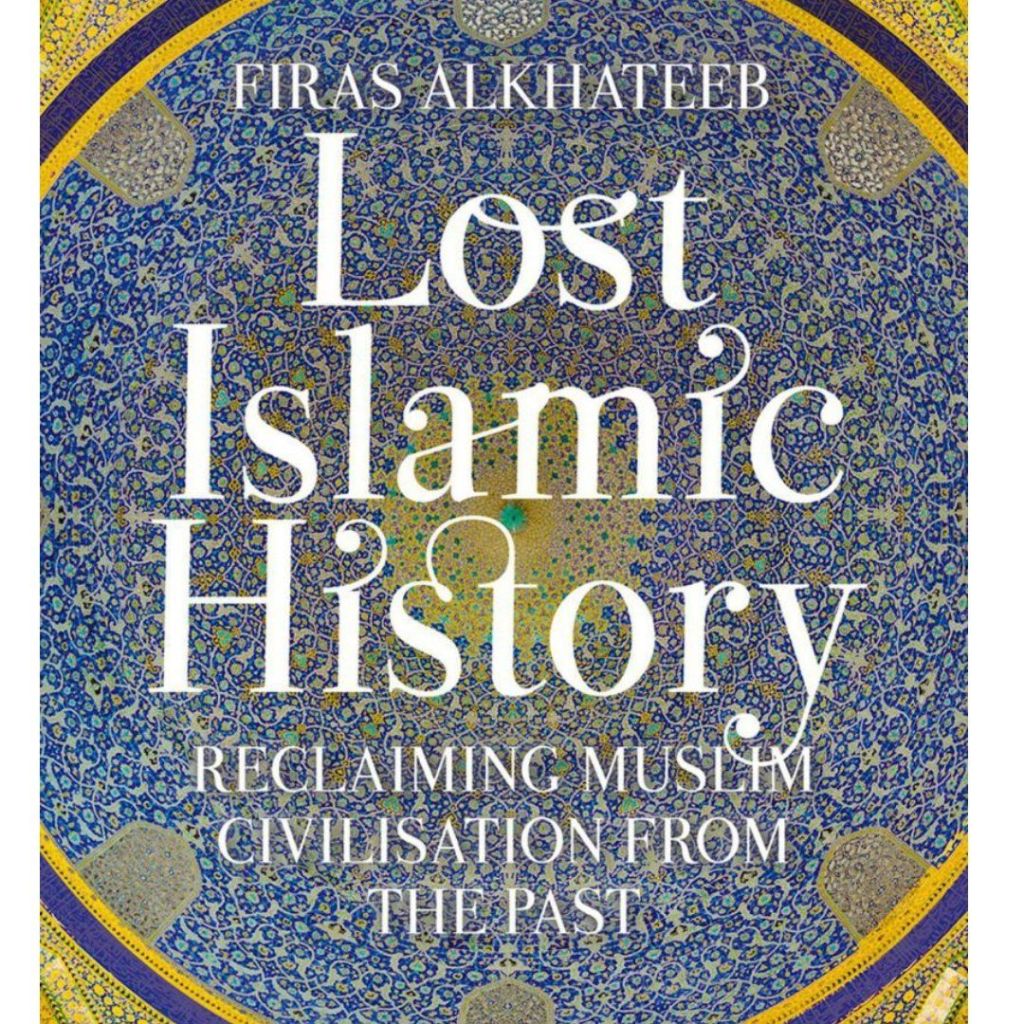
Book: Lost Islamic History: Reclaiming Muslim Civilisation from the Past.
Author: Firas AlKhateeb @khateeb88

 Moro Blanco
Leave a comment