In his book “The Bitcoin Standard: The Decentralized Alternative to Central Banking,” Saifedean Ammous offers a scathingly humorous and accurate critique of modern art. Here is a summary of the points he makes:
– Sound money (hard-to-produce money like gold) contributed to human flourishing in various fields, including art.
– Florence and Venice, both of which adopted sound money, were leaders in the Renaissance.
– Wealthy patrons with low time preferences supported art over decades.
– Great works such as the European church domes were financed with sound money.
– Classical composers like Bach and artists like Michelangelo dedicated their lives to their crafts.
– In the era of unsound money, represented by fiat paper money easily conjured up by banks via a keystroke, modern art lacks the dedication and effort of the past.
– Government involvement in art has led to political agendas overshadowing considerations of beauty and longevity.
– Modern art often lacks quality and relies on pretentiousness, shock value, and political themes.
– Both the CIA and Soviets used art for political purposes during the Cold War.
– Modern art can be lucrative with minimal talent and effort.
– The absence of great masterpieces in modern art is notable despite technological advancements.
– The Sistine Chapel and other historical masterpieces reflect deep thought and hard work.
– Some modern art is so vacuous that janitors have mistakenly thrown it away, thinking it was rubbish.
– Jacques Barzun’s critique of modern art suggests that modern culture lacks the refinement of the past.
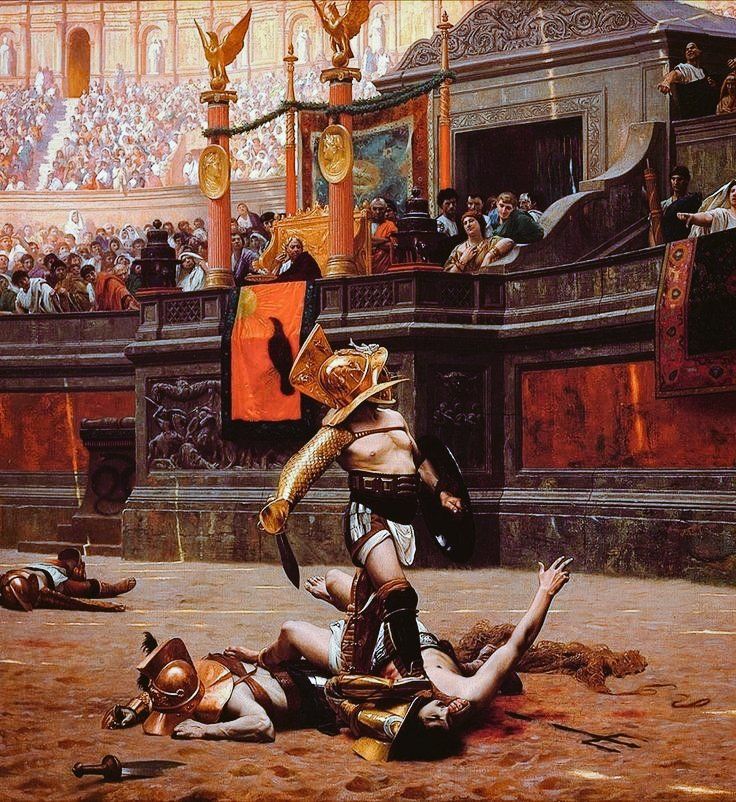
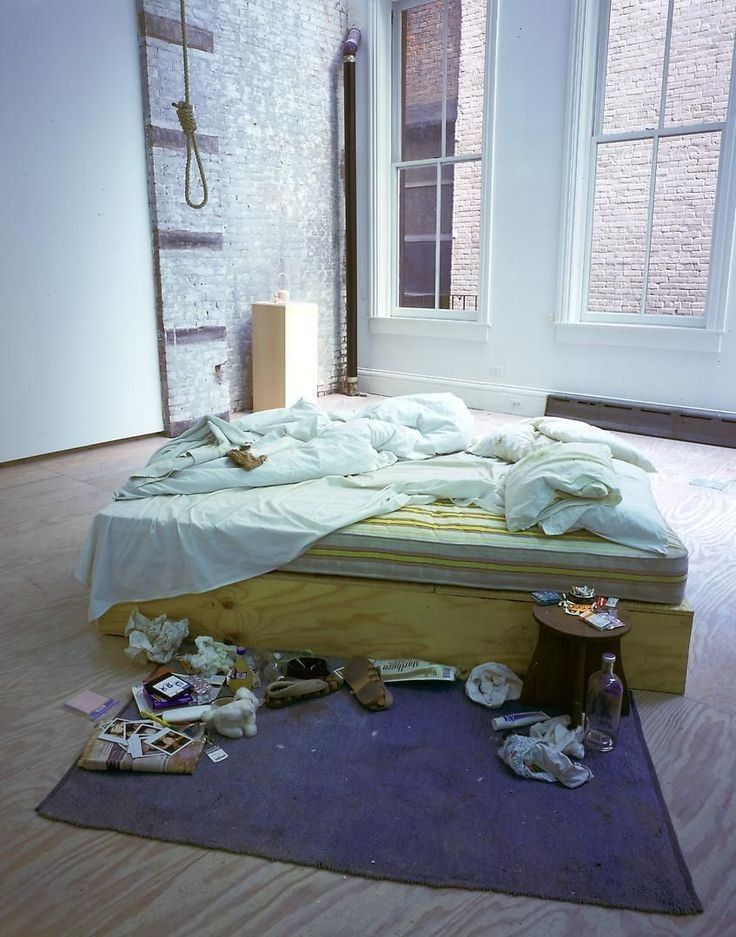
1998.

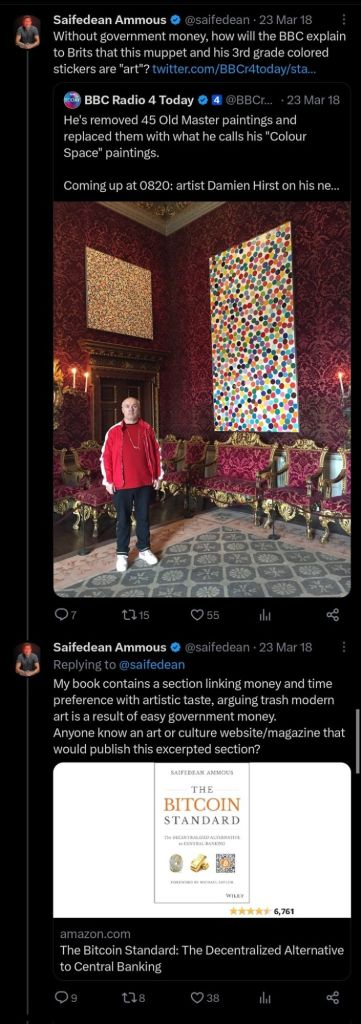
 Moro Blanco
Leave a comment